
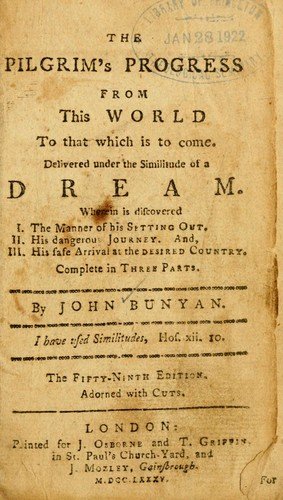
The Pilgrim's Progress
by John Bunyan
One of the most important Christian books ever written.
The classic allegory of Christian's journey from the City of Destruction to the Celestial City.
- Format
- Allegory (original or updated English)
- Ages
- Teens 13–17, Parents & Adults
- Reading level
- Lamp–Lighthouse · Estimated
- Faith
- Christian
- Tags
- None
Get this book
Find it on AmazonAs an Amazon Associate, we earn from qualifying purchases. It never costs you more, and it never changes our ratings.
Content guide
Positive elements
Perseverance and the Christian life.
Spiritual content
An allegory of salvation and spiritual battle.
Romance & sexual content
None.
Violence & scary content
Christian fights the monster Apollyon. Giant Despair imprisons pilgrims.
Language
None.
Crude humor & disrespect
None.
Other things to know
The original language is old-fashioned. Updated editions are easier for teens.
Talk about it
- Which character do you relate to?
- What burdens did Christian lose at the cross?
Teach with this book
Charlotte Mason-style ideas for homeschool parents and teachers. What is narration?
Teach with this book
Charlotte Mason-style ideas for homeschool parents and teachers. What is narration?
Narration
After each chapter, ask for a narration, oral or written. Older students can narrate a key scene in detail or write a short narrative essay.
Questions to think about
- What is Christian's burden, and where does he finally lose it?
- Why do you think Bunyan called it the Slough of Despond? When have you felt that way?
- What happens at Vanity Fair, and what does it teach about the world's temptations?
- How do Christian and Hopeful escape Doubting Castle? What is the key called?
- Which character would you most like to have as a traveling companion, and why?
Character and integrity
- Who in this book showed integrity, doing what was right even when no one was watching or when it cost them something?
- Was a character tempted to lie, cheat, or take the easy way? What did they choose, and what were the consequences?
- Which character are you most like? Which one would you like to be more like, and why?
- Think of a time you faced a choice like the main character's. What did you do? What would you do now?
Thinking about the allegory
- This story is an allegory, where characters and events stand for deeper truths. Who or what might the main characters represent?
- Which part of the story pictures the gospel: sin, rescue, and new life?
- Why do you think the author told these truths as a story instead of just saying them?
Point it to the Bible
- Matthew 11:28: Jesus invites the weary and burdened to come to Him for rest. How does Christian's burden fall away?
- Hebrews 12:1: We're told to throw off every weight and run with endurance. What weights did Christian carry?
- Is there a person or story in the Bible that reminds you of this book? How are they alike?
- Where do you see God at work in this story?
Assignment ideas
- Map the journey: draw Christian's path from the City of Destruction to the Celestial City.
- Picture narration: draw one place on the journey and narrate what happened there.
- Commonplace book: copy a line that encourages you and say why.
- Oral narration after each chapter; ages 10 and up can write one narration a week.
- Copywork: copy a beautiful or important sentence each week.
Parent reviews
Share a parent review
Loading…
Did we miss something?
The Family Bookshelf is free to use. It's funded by donations and affiliate links, which never cost you more and never change our ratings. As an Amazon Associate, we earn from qualifying purchases.
Get Involved